In this article
The short version
- Position your desk perpendicular to the main window: you get the view when you turn your head, and less glare.
- Leave at least 90cm of clearance behind your chair so you can roll back freely.
- Run a CAT6 armoured Ethernet cable from your router directly to the garden office rather than relying on house Wi-Fi.
- In a small build, look up: floor-to-ceiling shelving keeps the floor clear and makes a tiny footprint feel more open.
- Cheaper kits typically use single-skin timber walls, and their low prices usually exclude foundations, electrics and VAT.
If you’re still taking work calls from the dining room table, but you love the work-from-home lifestyle, a garden office offers a dedicated workspace with all the benefits. You no longer have to battle distractions, clutter, and the struggle to switch off at 5 pm.
It creates better separation between your work and home life, providing the physical and mental boundary you need to reclaim your work-life balance. With 28 percent of working adults in Great Britain now working hybrid, the need for garden offices is stronger than ever.
In this guide to garden office ideas, we will look beyond interior design and focus on the practical details, from ergonomics to ethernet cables, that turn a garden building into a productivity powerhouse.
Interior design & layouts: creating a space that works
Most people spend hours choosing their exterior cladding, but the reality is that you will spend your time staring at the inside walls.
A garden office needs to be a professional workspace first and a pretty garden feature second. The layout you choose is the difference between feeling productive and feeling like you are working in a cramped cupboard.
The deep work layout: desk positioning for focus
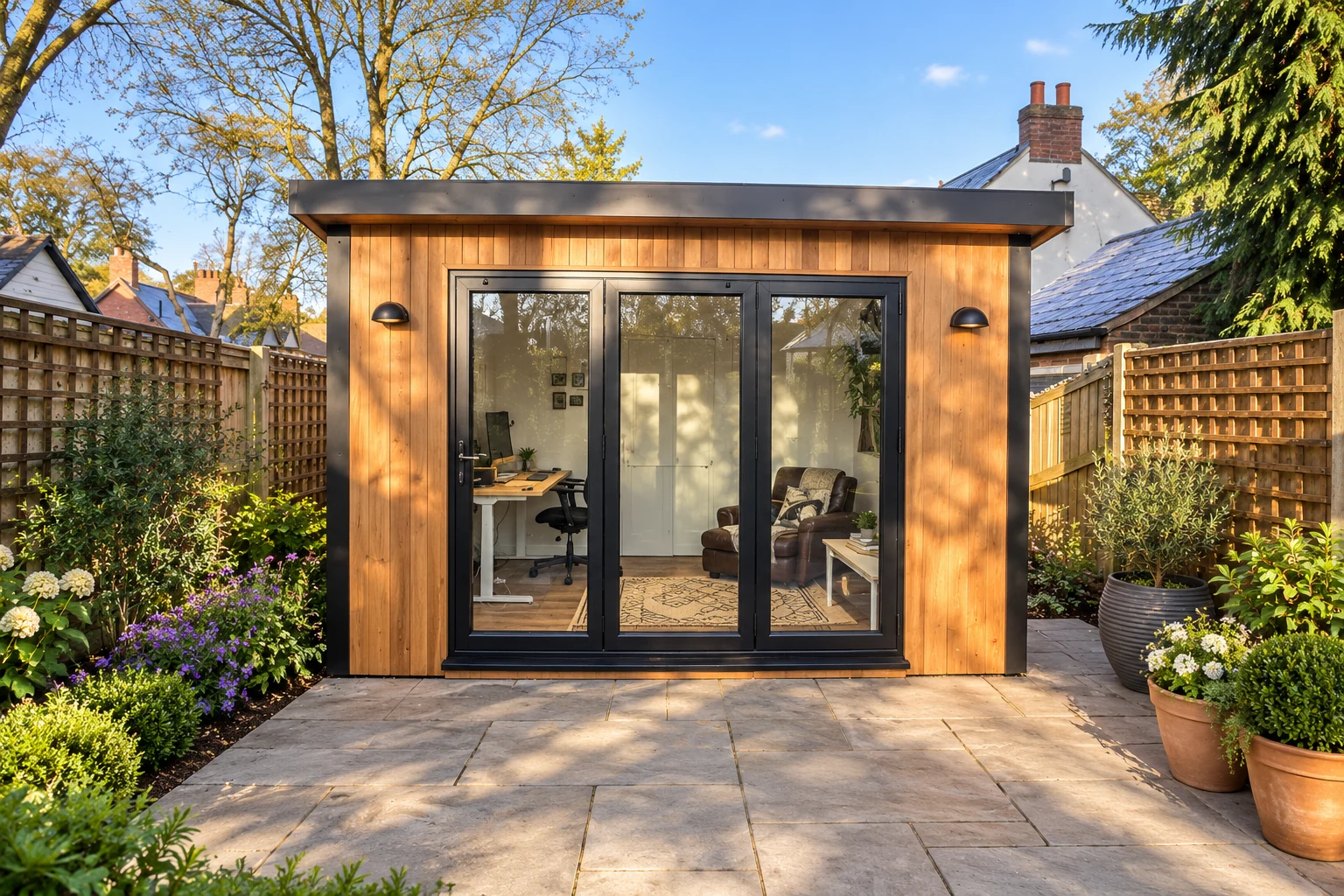
You might be tempted to push your desk right up against the glass to enjoy the view. We see this all the time, but the high contrast between your bright screen and the garden creates terrible eye strain. It also means you spend half your day squinting at glare.
We recommend positioning your desk perpendicular to the main window. This gives you the view when you turn your head, but keeps the light consistent across your monitors.
Just make sure you leave at least 90cm of clearance behind your chair so you can roll back freely without hitting a bookshelf.
The dual-purpose setup: office by day, relaxation zone by night
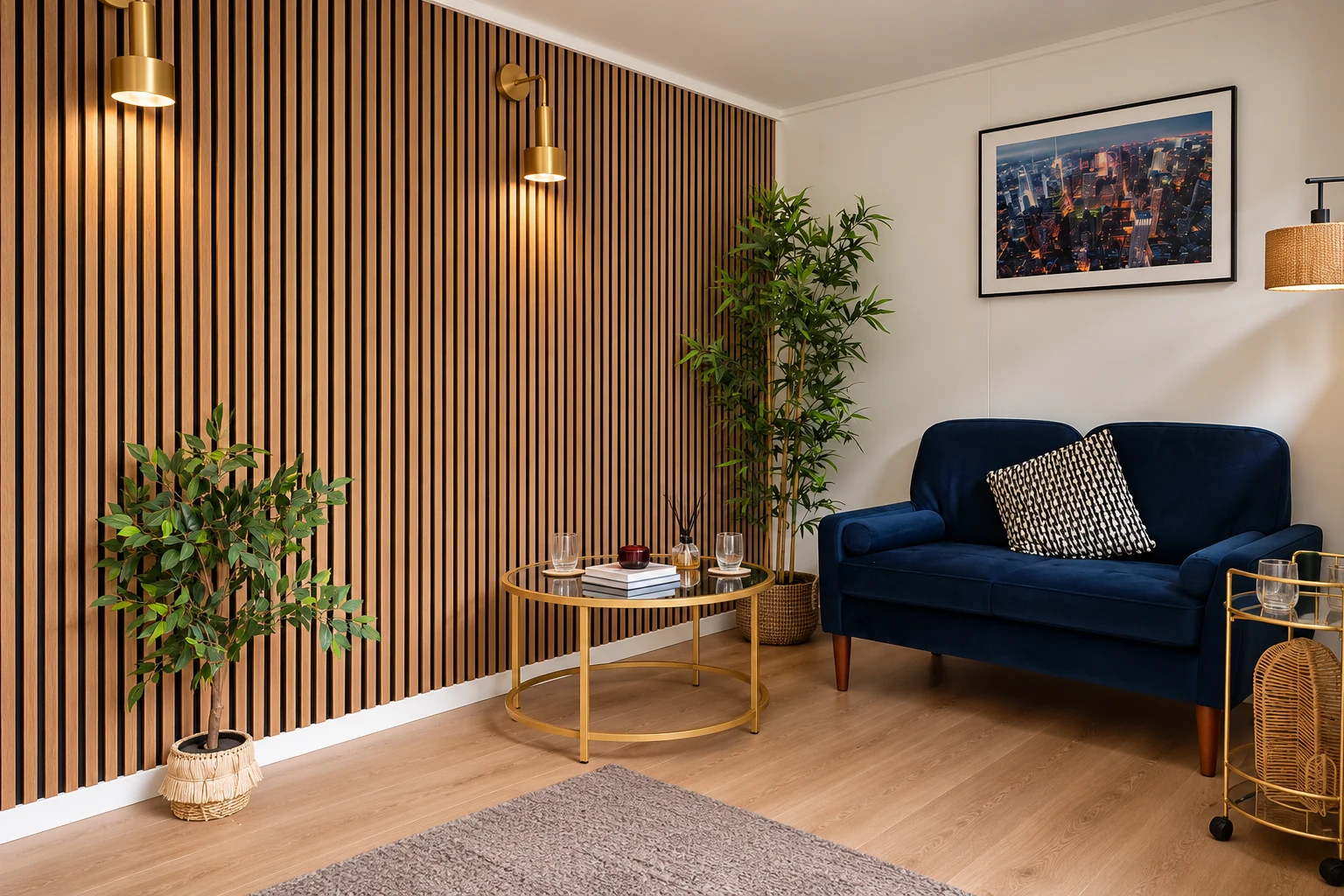
A garden room is a big investment, so it makes sense to make it work double shifts. Search data shows a huge interest in flexible layouts, and for good reason: why should a room sit empty after 5 pm?
We see many clients installing a wall-mounted TV or projector screen on the wall opposite their desk. Add a sofa bed or a couple of decent armchairs, and the room transforms the moment you close your laptop. It turns a 9-to-5 workspace into an evening retreat or a weekend gaming den for the kids, maximising the value you get from the build.
Zoning: using rugs and shelving to define work vs. rest
Open-plan spaces can sometimes feel a bit undefined. If you are combining a gym or a lounge with your office, you need a visual cue to help your brain switch modes.
Try using tall, open shelving units to divide the room without blocking the light. A rug under the seating area also helps signal where the office stops and the lounge starts. This simple trick keeps your work stress contained to the desk area rather than letting it bleed into your relaxation zone.
Small garden office ideas: big potential in a tiny plot
You do not need a sprawling garden to build a dedicated workspace. In fact, compact plots often result in the best designs. A well-planned small garden office removes the need to extend your home while keeping your garden intact.
The micro-pod approach: minimalist setups for one
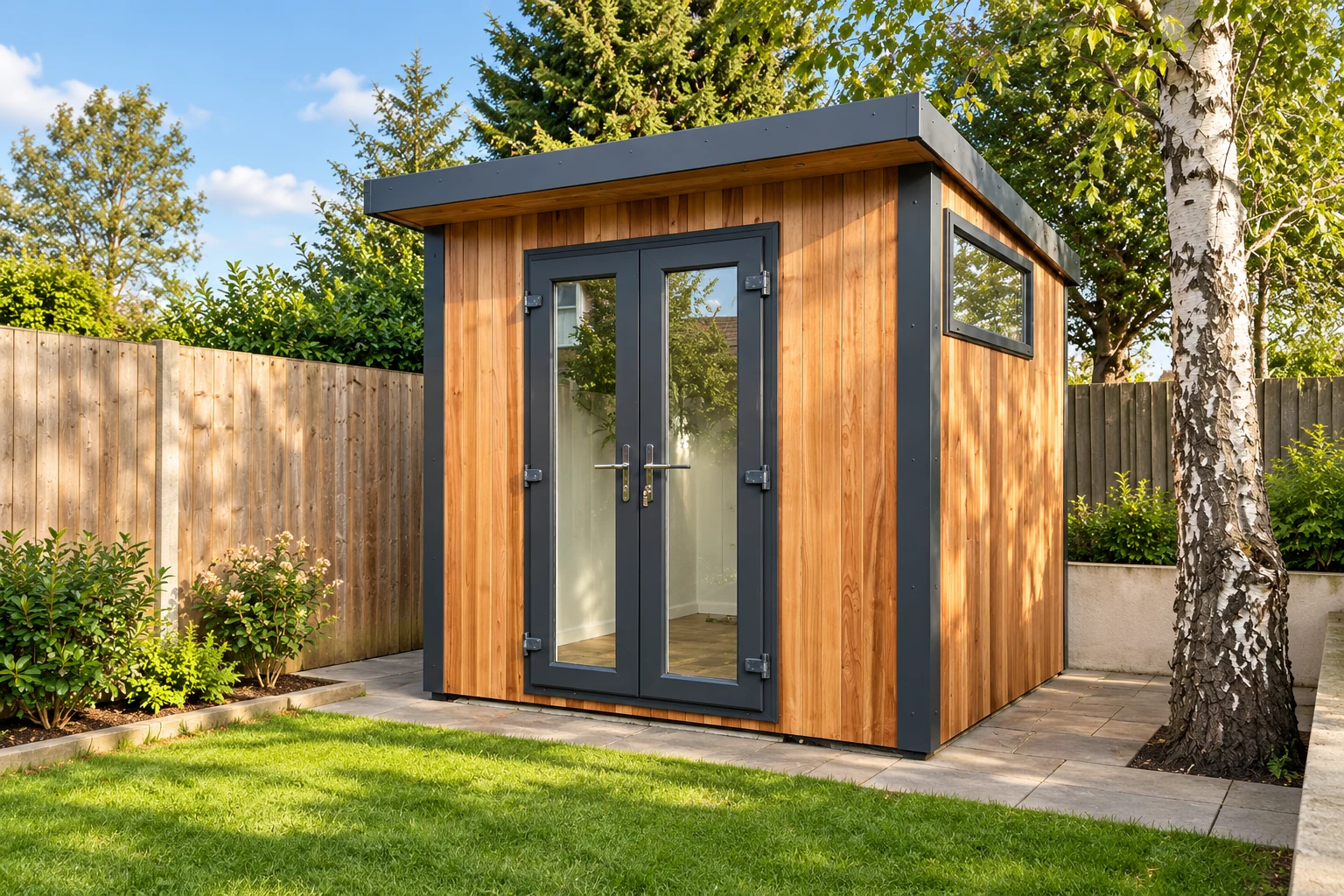
A micro-pod or a small-sized garden room, designable on our configurator, is a standalone room that works for a single person. These are ideal for freelancers or hybrid workers who need a quiet spot for their laptop and a coffee.
The key here is stripping back non-essentials. A compact 10 x 10 design fits a desk and chair comfortably without dominating your garden. This pod style allows you to tuck the building into a corner or close to a boundary fence, freeing up the rest of your garden for summer barbecues.
Smart storage hacks: floor-to-ceiling shelving & fold-down desks
Floor space is your most valuable aspect of a small build. If you cover the floor with filing cabinets, the room will feel claustrophobic immediately.
Look up instead. Installing floor-to-ceiling shelving draws the eye upward and uses dead wall space for files and equipment.
For truly tight spots, a fold-down desk can change the room from a workspace to a reading nook in seconds. Prioritising vertical storage keeps the floor clear, making even a tiny footprint feel far more open.
The essentials: connectivity, acoustics & climate
A beautiful office is useless if the internet drops every time you join a client call or if you freeze in December. These technical factors determine if your garden room is a genuine workspace or just a posh shed.
Hardwired data vs. Wi-Fi extenders
You cannot rely on your house Wi-Fi to reach the bottom of the garden. Even with boosters, the signal still struggles to punch through insulated walls and double glazing. A dropped connection during an important meeting is unprofessional and frustrating.
We always recommend running a CAT6 armoured Ethernet cable from your router directly to the garden office. This hardwired connection guarantees stability and speed exactly as if you were inside your main house.
You can then plug in a dedicated Wi-Fi access point for your phone and tablet without sacrificing bandwidth on your laptop.
Soundproofing for video calls
Thin timber walls let every lawnmower, barking dog, and passing car interrupt your headspace. You need residential-grade insulation with acoustic properties to keep the outside world at bay.
Mass is the key to blocking noise. Our multi-layered wall construction acts as a sound barrier, dampening any external noise. This setup also works both ways, keeping your own noise in, so you can take loud calls or play music without annoying the neighbours.
Task lighting vs. ambient glow
Overhead spotlights are standard in our electrics pack, but they can cast harsh shadows on your face during video calls. You need a layered approach to look professional on camera and avoid end-of-day eye strain.
Position a soft, diffuse light source behind your monitor to light your face evenly. Combine this with dimmable LED ceiling panels or warm ambient strips to soften the room’s atmosphere in the evening.
This mix gives you bright focus light for paperwork and a calmer vibe for late-night finishes.
Exterior styles: matching your garden office to your home
Your garden room will be a visible feature of your outdoor space, so it is worth making sure it complements the look of your home. A well-designed office should feel like a deliberate extension of your property rather than an afterthought dropped onto the lawn.
The contemporary look: composite cladding & bi-folds
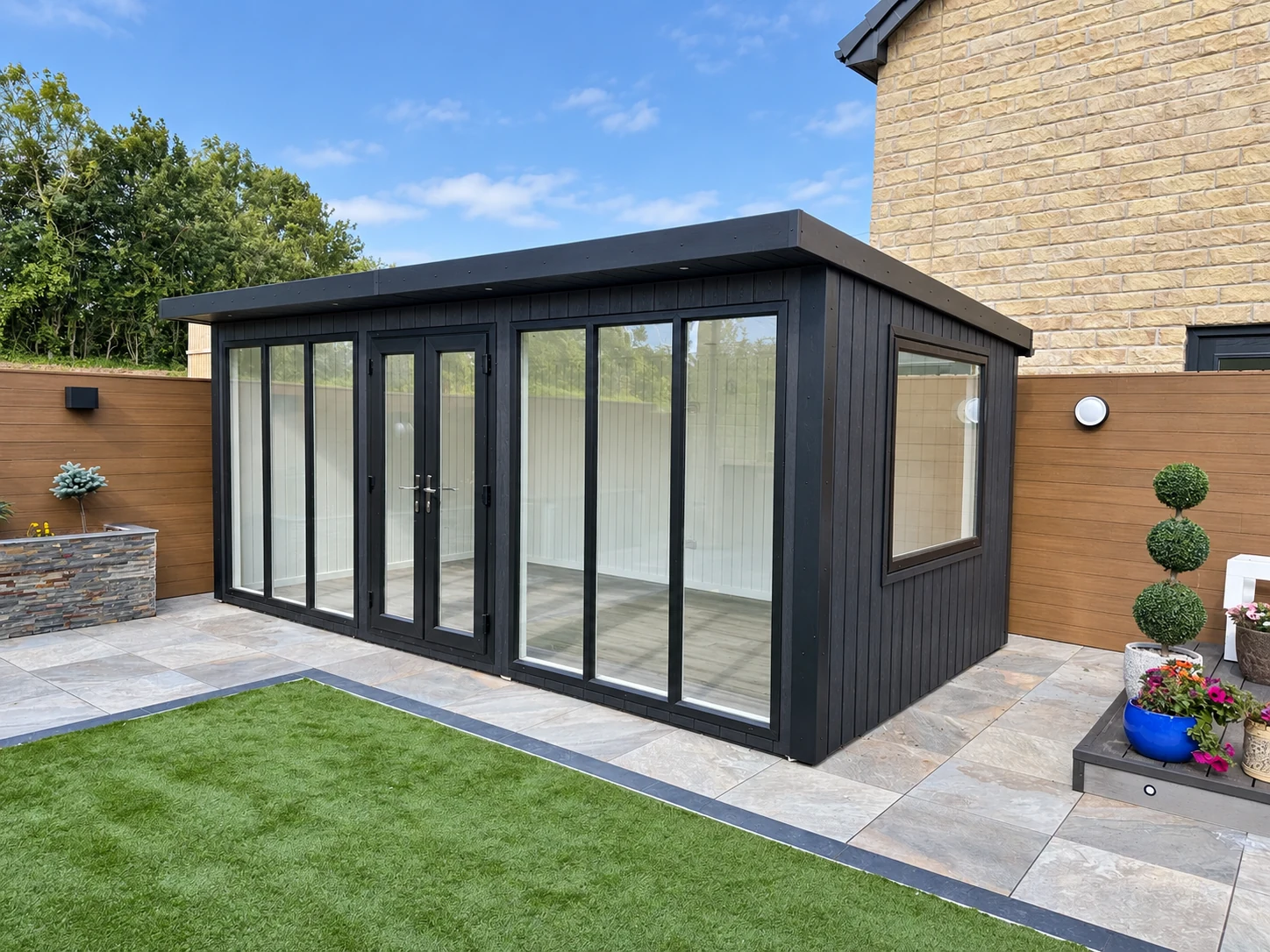
If you want a sleek, modern vibe, composite cladding is the superior choice. These boards are made from recycled wood and plastic, creating a durable finish that resists rot and fading.
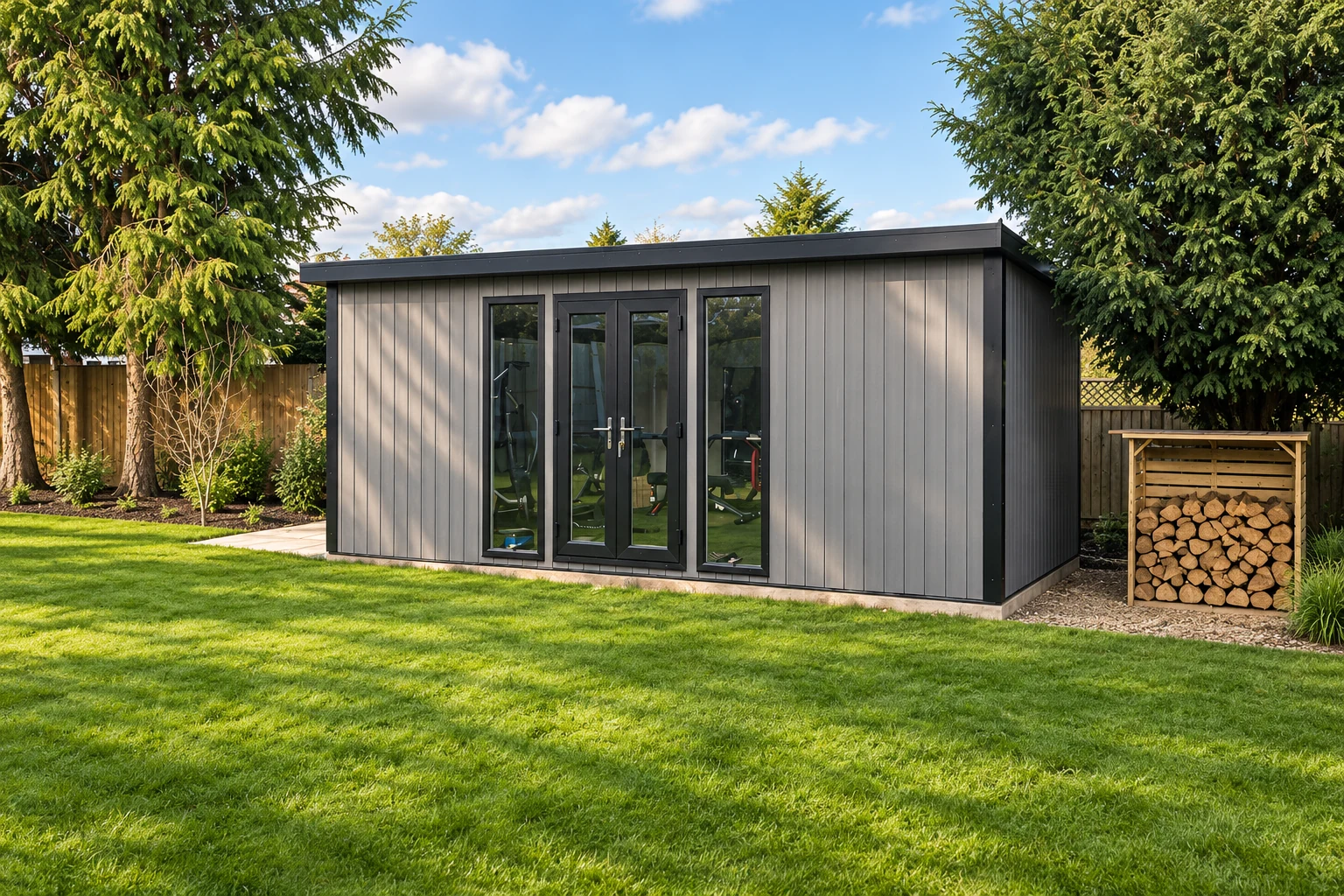
This material works perfectly for clean, architectural lines. We often pair smooth composite boards in colours like light grey or charcoal with large glass bi-folds. This combination creates a studio feel that suits urban gardens and modern new-builds, requiring almost zero maintenance to keep looking sharp.
The traditional look: timber & pitched roofs
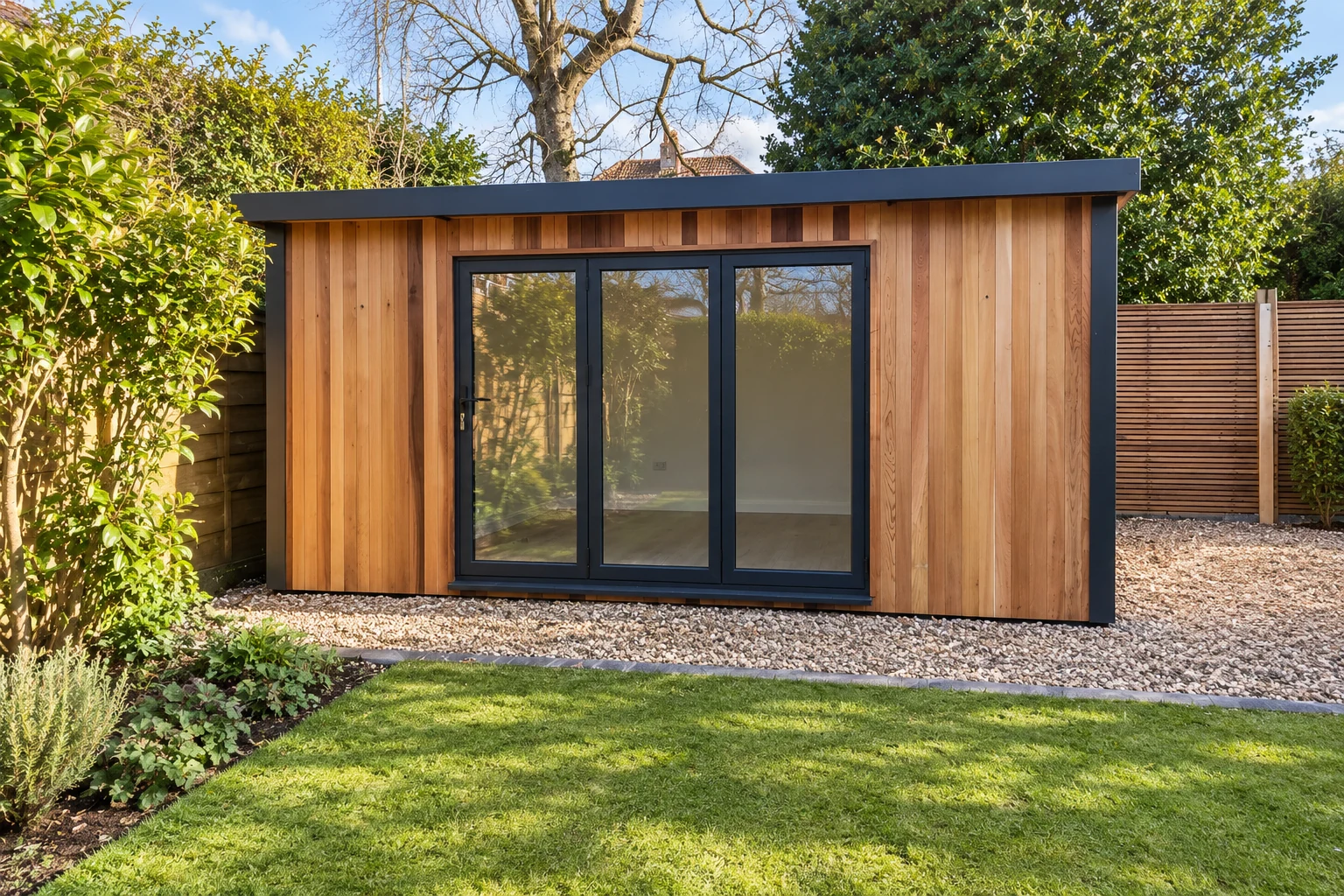
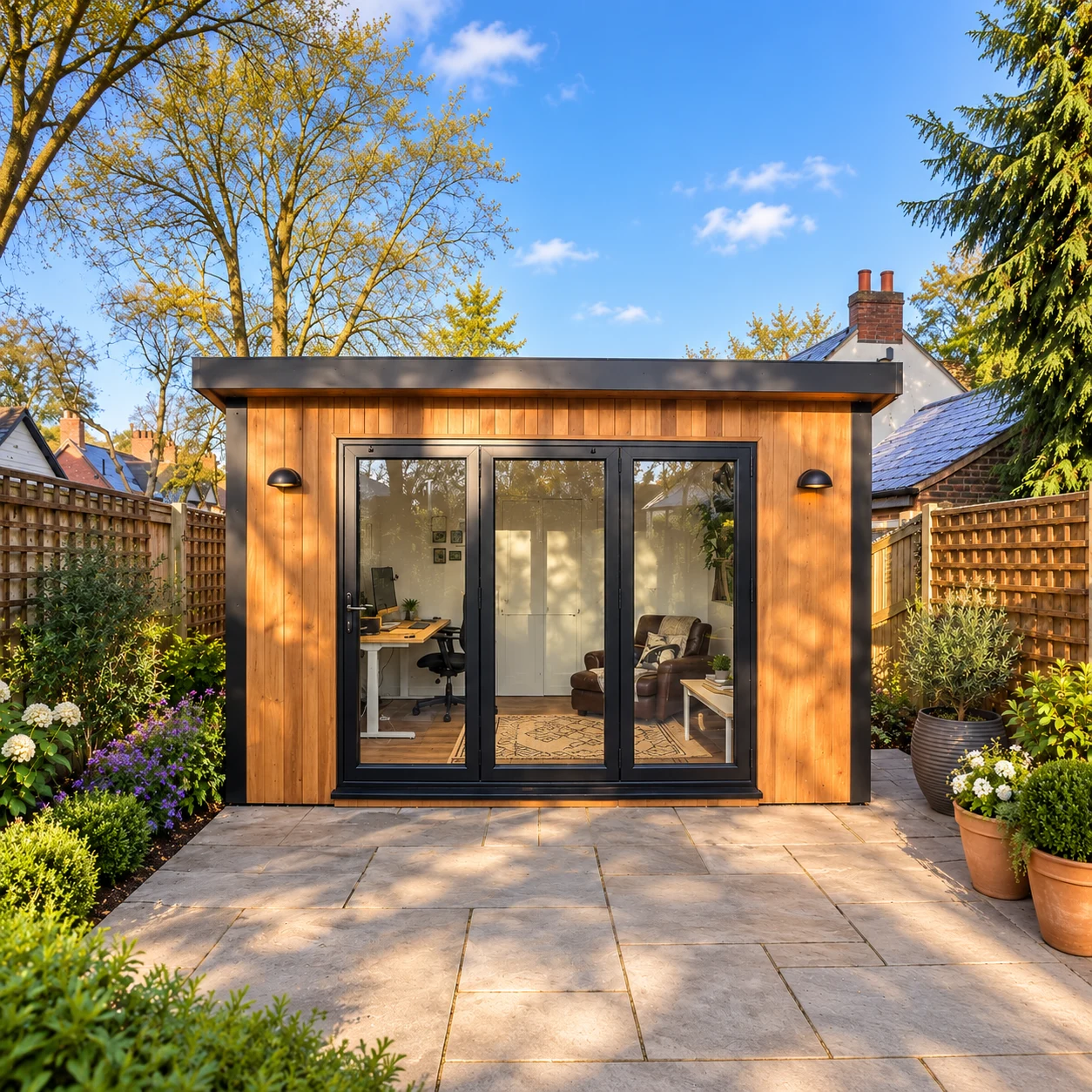
Natural timber cladding offers a softer, more organic appearance that blends into more natural gardens. Western Red Cedar is a favourite here for its rich, warm tones and natural resistance to decay.
While timber demands more upkeep than composite to maintain its colour, it provides a rustic charm that synthetic materials cannot quite replicate.
If you have a period property or a cottage-style garden, the texture of real wood, customisable on our build your own configurator, sits more comfortably alongside lots of flowers and trees.
Cost & planning: turning ideas into reality
You naturally want to know the bottom line before falling in love with a design. The cost of a garden office varies depending on whether you choose a basic kit or a fully installed studio.
Budgeting for a garden office: kit vs. installed
You will see cheap garden office ideas advertised online for tempting prices. It is vital to understand the difference between these log cabin-style kits and a high quality-grade build.
Cheaper kits typically use single-skin timber walls. They heat up like greenhouses in summer and freeze in winter, making them unusable for half the year without expensive heating.
A properly insulated garden room uses multi-layer construction, built just like a timber-framed house, to keep you warm year-round.
Investing in quality materials upfront saves you money in the long run. A Thermowood or composite room lasts decades with minimal maintenance, whereas a budget shed often requires annual treatments and repairs just to stay watertight.
While you can find cheaper DIY flat pack kit options online, these low prices typically exclude the essentials. You usually still need to pay for foundations, electrics, and VAT on top. We provide clear, upfront pricing so you know exactly where your money goes.
Electrical supply connection: Connection of the garden room to the main property electrical supply is not included unless expressly stated within the quotation. This work can be quoted separately if required, subject to a site survey and the requirements of our electrical contractor.
Your new 10-second commute starts here
Building a workspace in your garden is about more than just timber and glass. It is about creating a space where you can do your best work without the household chaos creeping in.
- Prioritise the layout: Don’t let the view compromise your ergonomics. Position your desk to reduce glare.
- Get the tech right: Hardwired internet, heating, and proper lighting are non-negotiable for reliability.
- Invest in comfort: Choose premium-grade insulation over cheap log cabin kits to ensure you can work through winter.
You don’t have to figure out the technical specs alone. If you want to know exactly what fits in your plot and how much it will cost, let us handle the tape measure.
Book a chat with Noah Garden Rooms today, and let’s design a commute you actually enjoy.
Sources: Planning Portal: outbuildings and planning permission; Planning Portal: working from home.