
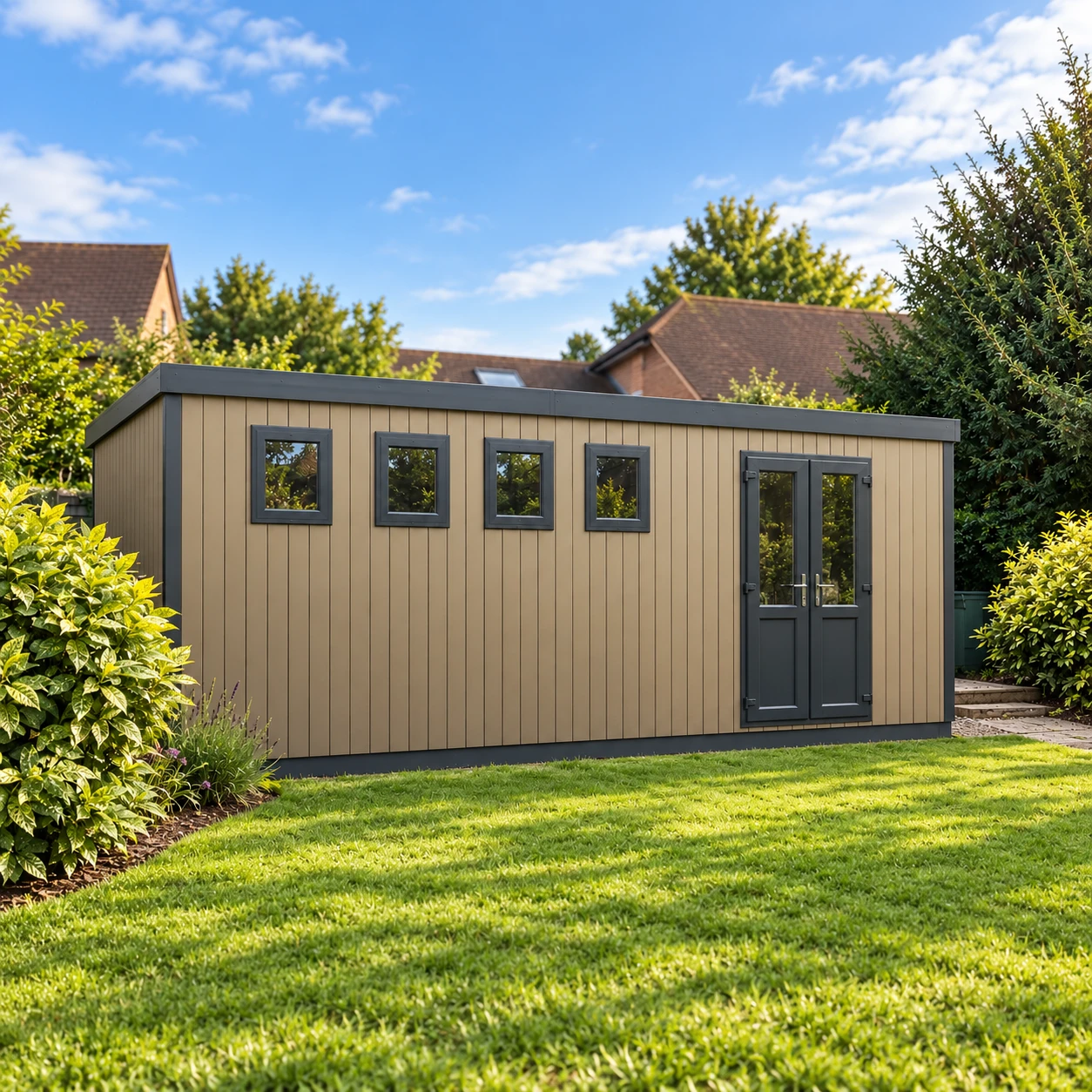
In this article
- Why garden room cladding matters
- The best cladding for garden rooms: exploring your options
- Composite vs. timber: which is right for you?
- Creative garden room cladding ideas to inspire your design
- Mixing materials: combining anthracite doors with natural wood
- How installation affects lifespan
- The final finish: bringing your vision to life
The short version
- Composite looks after itself: a quick wash with warm, soapy water once or twice a year is enough to keep it looking new.
- Western red cedar will weather to silver-grey unless you apply a UV-protection oil each year to keep its vibrant colour.
- Pressure-treated timber is the affordable choice. It wants a waterproofing paint soon after installation and then yearly.
- Thermowood is heat-treated, a middle ground between standard timber and premium cedar, with a darker tone than pine.
- The way your cladding is fitted, with a breathable membrane and an air gap behind it, determines how long your room lasts.
Searching for the best garden room cladding ideas often lands you in a tricky debate between what looks good and what’s easy to care for.
We all want a building that looks stunning on day one, but nobody wants to deal with endless maintenance or a material that looks tired after one winter.
Getting this decision wrong affects more than just kerb appeal: it impacts how long your investment lasts. In this guide, we’ll break down the real differences between composite and timber to help you find the fit that matches your garden vibe and lifestyle.
Why garden room cladding matters
While the interior of your garden room is where you live and work, the exterior determines how long that space lasts. Garden room cladding acts as the first line of defence against the unpredictable British weather, waterproofing the structure to prevent moisture from causing damp, mould, or structural damage.
It does more than just keep the rain out. High-quality cladding adds a vital layer of protection to the insulation behind it. On our insulated ranges, this helps maintain a comfortable temperature inside, so you can use your garden room year-round rather than just in the summer months.
When considering your garden room cladding ideas, aesthetics play a huge role too. Your garden room is a major feature of your outdoor space, so the finish needs to complement your home.
Whether you want bold and modern or a finish that blends naturally into the foliage, your choice of cladding changes the character of the entire build.
The best cladding for garden rooms: exploring your options
When you are scrolling through garden room cladding ideas, it is easy to just focus on the colour. But the material you choose influences more than just the look. It decides whether you spend your weekends enjoying the room or painting it. Let’s explore your four main cladding options:
1. Composite cladding: the zero-maintenance hero
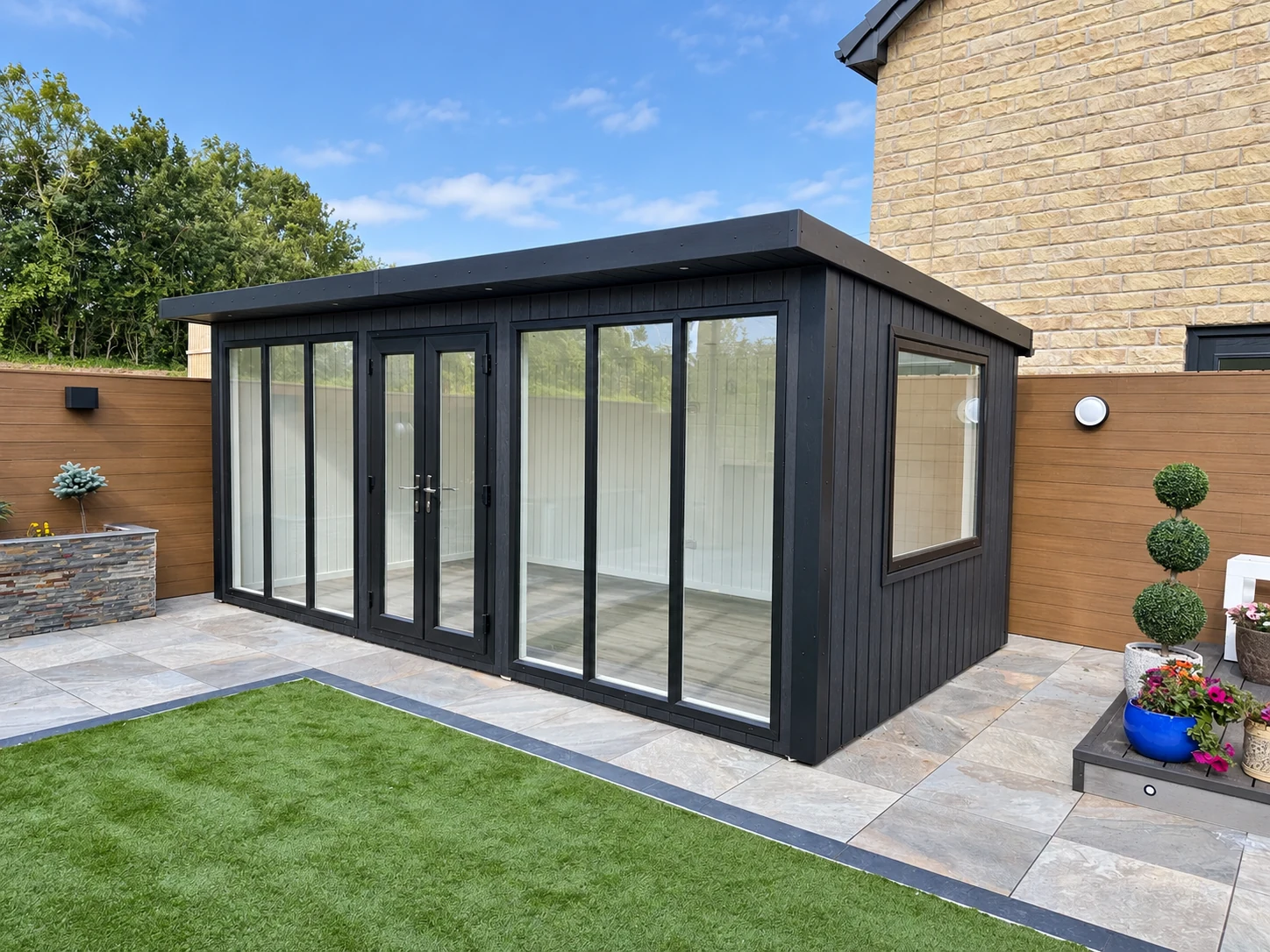
If you want a modern finish that looks after itself, garden room composite cladding is the way to go. We make ours using a blend of 60% recycled hardwood fibres and 40% recycled plastic. The result is a board that stands up to British weather without warping, rotting, or splitting.
Longevity is the real draw here. Unlike timber, which fights a losing battle against the sun, composite boards have UV-stable pigments baked right in.
They will fade slightly over time, but are easily restorable with colour restorers. More importantly, they do not demand a fresh coat of paint every spring. A simple wipe-down is usually all it takes to keep the composite cladding looking pristine for years.
2. Western red cedar: the premium natural timber
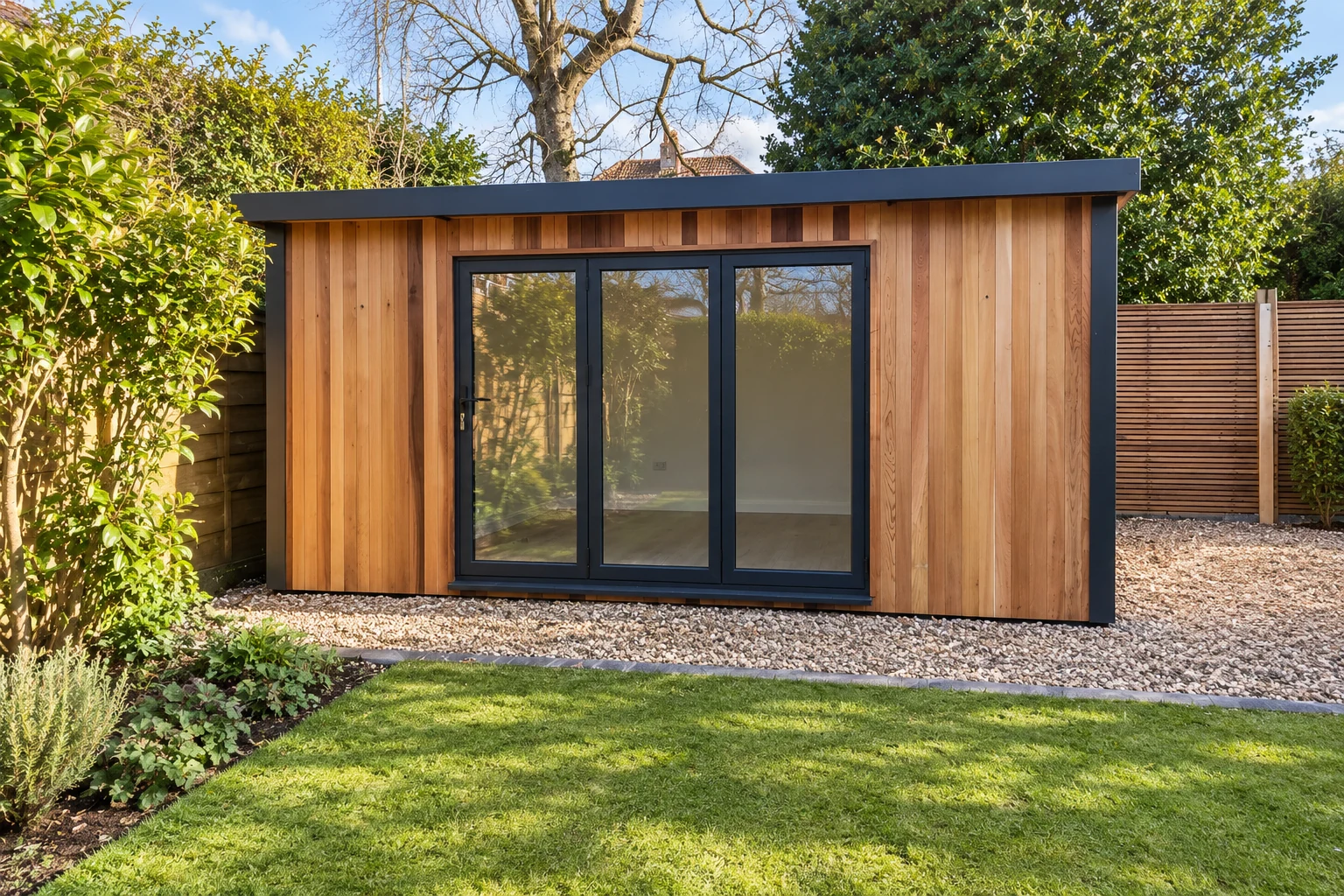
For lovers of the traditional, nothing beats western red cedar. It offers a rich, warm mix of reddish-brown and amber tones that adds instant character and value to any timber-clad garden room.
It isn’t just a pretty face, either. Cedar is packed with natural oils that act as preservatives, fighting off decay and insects without us needing to add a drop of chemical treatment. Over time, untreated cedar will weather to a distinguished silver-grey. If you prefer to keep that vibrant colour, you can apply a UV-protection oil each year, a finish that defines our luxury designs.
3. Pressure-treated timber: the affordable choice
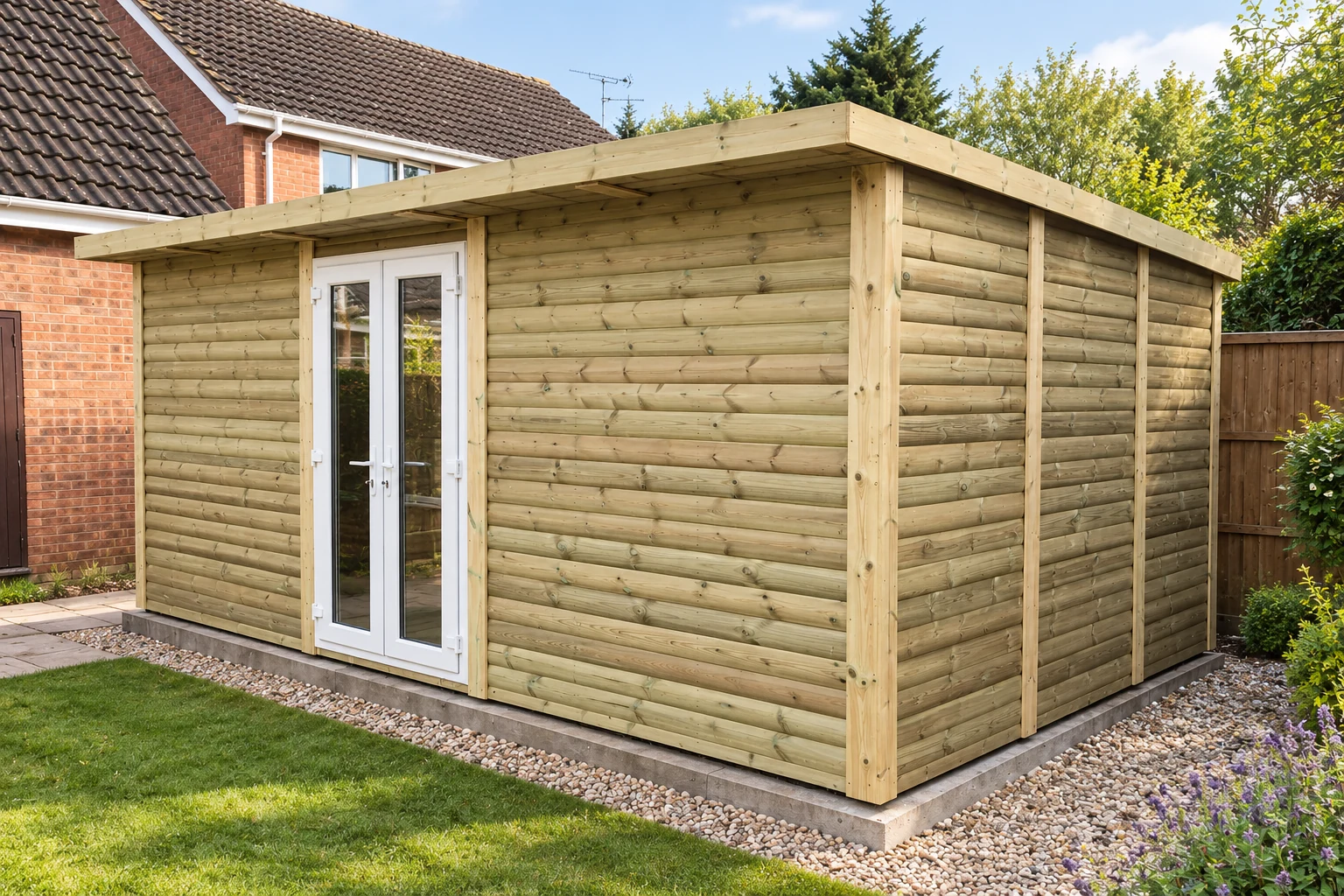
Many of our clients still love the classic look of pressure-treated timber. It offers that timeless, natural aesthetic at a much more accessible price point compared to cedar or garden room composite cladding.
We treat our timber to ensure preservatives penetrate deep into the grain, protecting the wood against rot and fungus. This process guarantees the structure stays sound.
It also gives you a blank canvas: it wants a waterproofing paint soon after installation and then yearly, so you can paint your garden room to match a colour scheme, making it one of the most versatile garden room cladding ideas for those who love to customise.
4. Thermowood: the sustainable upgrade for Garden Pods
Thermowood offers a fantastic middle ground between standard timber and premium cedar.
The timber undergoes a specialised heat treatment process that removes moisture and resin. This makes the wood incredibly stable, reducing movement, swelling, or shrinking when the temperature changes.
It has a long lifespan and a rich, darker tone than standard pine, making it an excellent addition to your list of eco-friendly garden room cladding ideas. It is a great cladding for a high quality painted finish.
Composite vs. timber: which is right for you?
Deciding between composite and timber cladding usually comes down to a choice: modern convenience or traditional and natural. Both materials offer excellent protection for your garden room, but they behave very differently over time.
To help you decide, we have broken down the key differences in maintenance, ageing, and cost.
Maintenance: oiling vs. cleaning
If you want a fit and forget about it solution, composite cladding wins hands down. Because it is a blend of plastic and wood fibres, it doesn’t soak up water or attract bugs. You never need to sand or seal it. A quick wash with warm, soapy water once or twice a year is enough to keep it looking new.
A timber-clad garden room asks for a bit more in return. While it is incredibly durable, natural wood is organic. It moves, breathes, and reacts to the weather.
If you want to keep that vibrant reddish-brown colour on Western Red Cedar, you will need to apply a UV-protection oil yearly. Without it, the sun will eventually bleach the colour, though the wood itself will remain structurally sound.
Ageing: the silvering effect explained
One of the biggest surprises for new garden room owners is how wood changes colour. All natural timber, including Cedar and Larch, reacts to sunlight. Over a few years, unoiled cedar will weather to a distinguished silver-grey patina. Many people love this rustic, natural look, but it is important to know that it will happen unless you actively prevent it.
Composite cladding offers colour consistency. It contains UV-stable pigments mixed directly into the material during manufacturing. While it may lighten slightly in the first few months as it settles, it largely retains its original colour for decades, ensuring your garden room looks the same in ten years as it does on day one.
Cost vs. value: what is the best investment?
Budget often drives the final decision. Pressure-treated timber is generally the cheapest cladding for garden rooms, making it an excellent entry-level option that still provides a classic aesthetic and robust protection.
Western Red Cedar and Composite sit at a higher price point because of their longevity. However, it is worth calculating the long-term value. While composite might cost more upfront, the lack of maintenance costs, no expensive oils, paints, or treatments, makes it one of the most cost-effective garden room cladding ideas in terms of lifetime value.
Creative garden room cladding ideas to inspire your design
Your choice of cladding changes the personality of your new building. While the material determines the maintenance level, the layout and colour combination create the style.
Whether you want a building that disappears into the trees or stands out as an architectural feature, these garden room ideas will help you visualise the possibilities.
Vertical vs. horizontal cladding
Changing the orientation of your cladding boards dramatically alters the finished look of your garden room. Horizontal cladding offers a traditional aesthetic, often associated with classic log cabins or summerhouses. It can make a smaller building feel wider and more grounded in the landscape.
Vertical cladding as standard creates a more contemporary feel. This style draws the eye upwards, creating an impression of height and elegance. We offer vertical orientation on our garden room range to give it a sharp, modern edge, which is currently one of the most trending garden room cladding ideas for more modern spaces.
Mixing materials: combining anthracite doors with natural wood
One of the most popular garden office cladding ideas involves playing with contrast. You don’t have to stick to one single tone. Pairing the rich, warm hues of Western Red Cedar or brown composite with dark Anthracite Grey door frames creates a striking, high-end finish.
This combination balances the rustic warmth of a timber-clad garden room with the sleek, industrial look of modern aluminium or uPVC.
Our Garden Rooms range frequently utilises this design, using dark corner trims and fascia boards to frame the timber cladding. It is one of the most effective garden room cladding ideas for turning a simple building into a true focal point.
How installation affects lifespan
Selecting premium materials is only half the battle. The way your cladding is fitted determines whether your garden room lasts ten years or thirty. Poor installation can cause even the most expensive timber to rot from the inside out.
The installation process must be treated with the same precision as the design phase. Correct fitting ensures your building remains watertight and stable for decades.
The importance of airflow and waterproof membranes
Moisture is the enemy of any garden building. If a garden room does not have the correct membranes in the structural wall, trapped dampness will quickly lead to rot.
We install a high-performance breathable waterproof membrane behind every cladding board. This specialist layer prevents rain from penetrating the core structure while allowing internal moisture to escape and breathe. We also create a crucial air gap between the cladding and the wall. This ventilation allows air to circulate freely, keeping the timber dry and stable no matter the weather.
Why we manufacture & install in-house
Quality control is often the difference between a room that lasts five years and one that lasts thirty. Many suppliers rely on mass-produced third-party panels and subcontractors, which can sometimes lead to inconsistencies like uneven gaps or weak weatherproofing.
To avoid this, we keep the entire process under one roof, apart from the electrics, which qualified electrical contractors fit. Manufacturing our own panels means we can check every piece of timber for defects before it even leaves the workshop, including installing the garden room before delivery for full quality control checks. It also means the team installing your room knows exactly how it was built.
This direct accountability ensures precise alignment and secure fixings, giving you a structure that is genuinely built to stand the test of time.
The final finish: bringing your vision to life
Deciding on the exterior finish is the final piece of the puzzle. Your choice comes down to a personal trade-off: do you want the evolving, natural character of timber, or the ease of composite?
Regardless of which side you land on, remember that the material is only as good as the installation behind it. Even the most expensive cedar can fail if the airflow and fixings aren’t perfect.
That is why we don’t just ship packs of wood: we craft the entire building in our UK workshop to ensure every board sits exactly where it should. That’s why we are rated 4.6, Excellent, on Trustpilot.
Stop guessing how it might look on a screen and see the quality for yourself. Visit our Telford Showroom to explore the ranges in person, or book a chat with our team to start building your dream space.