In this article
The short version
- When properly water-proofed and insulated, a garden room can be used for many of the same purposes as an extension.
- Buyers notice the basics: a sound roof, doors that close cleanly, cladding in good order and no sign of damp.
- Uncertified electrics, sleeping use without approval or too much building for the plot can count against a sale.
- A buyer's solicitor and surveyor will ask about the garden room, so keep the paperwork together in one folder.
- It is common for estate agents to use garden rooms and home offices as a key feature on their listings.
Are you thinking of adding a garden room to your property? Whether you want to use it as a home office, gym, or entertainment room, it could be one of the best ways to increase the value of your home.
According to Halifax, adding a garden room is one of the easiest ways to make your property more desirable and add value. Predictions estimate that a garden room can raise the value of your property.
A garden room makes your property more desirable by creating additional space attached to the property. Garden rooms can be used for multiple purposes from extra space for guests, to entertainment rooms and home offices. There’s an endless list of uses for a good quality garden room.
Garden room versus extension: which is best?
Traditionally, home owners believed that the best way to add value to their homes was to build an extension. However, building an extension requires planning permission and extensive, disruptive works that can take weeks to complete. Not to mention the cost of an extension which costs between £2,200-£3,300 per m² of new internal space according to homebuilding.co.uk.
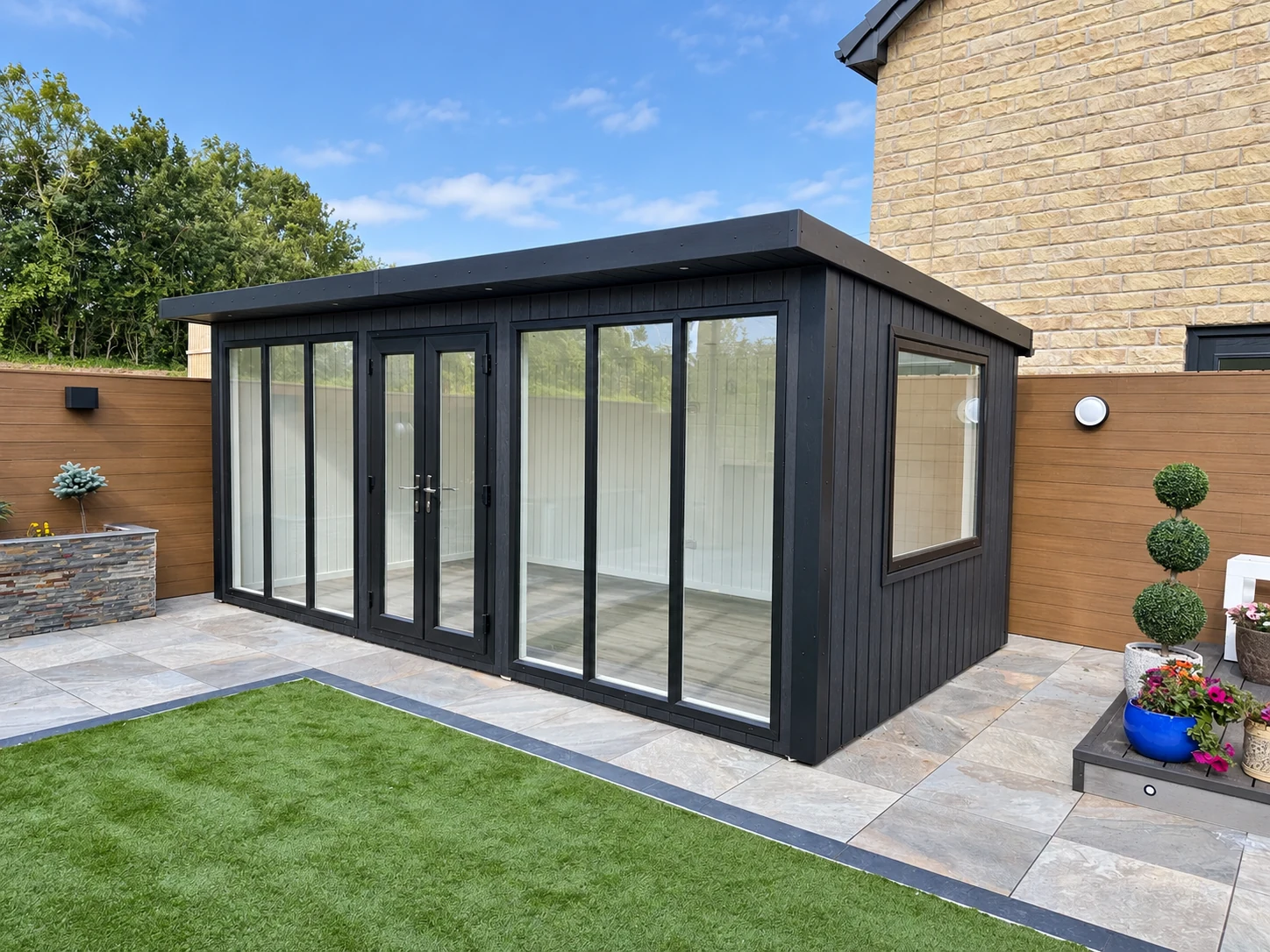
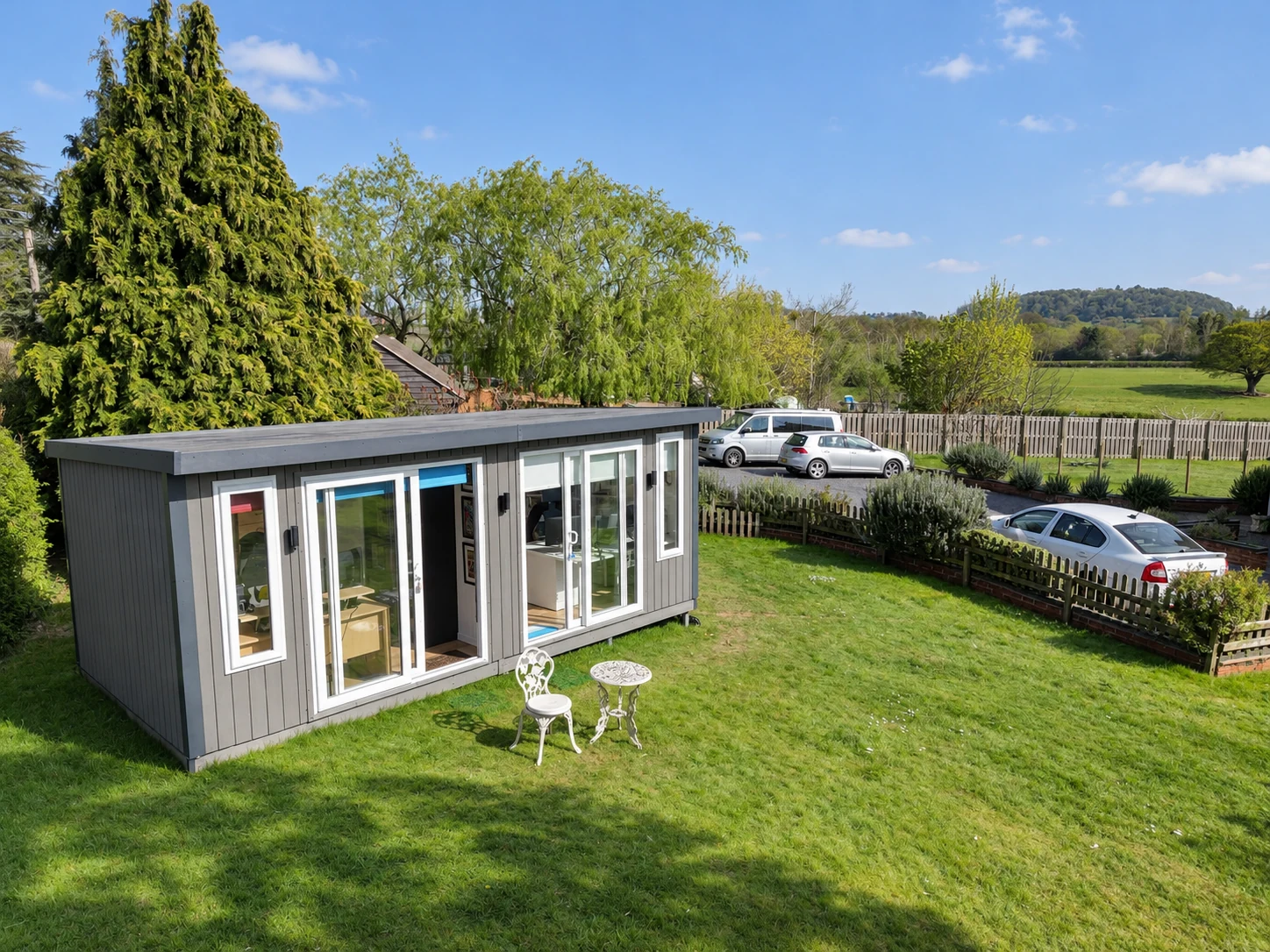
A garden room however is easy to install, usually doesn’t require planning permission and is ready to use almost straight away. When properly water-proofed and insulated, a garden room can be used for many of the same purposes as an extension. Our customers have turned them into home offices, gyms, playrooms, guest rooms and much more.
Using a garden room as a home office
With more people now working remotely and working from home, there has been a rise in garden rooms being used as home offices. In January 2021, PropertyHelp reported a 326 percent rise in property listings using the words ‘office’, ‘workplace’ and ‘working from home’.
In the same article, PropertyHelp also says that there has been a 90 percent leap in the amount of people searching for properties with the keyword ‘annex’ (or ‘annexe’ as it’s often spelt). This goes to show that there is a huge demand for garden rooms and home offices in the current property market. Adding one not only increases the value of your home, it also makes it more appealing when you decide to sell, so it’s common for estate agents to use garden rooms and home offices as a key feature on their listings.
Take a look at our full range of garden rooms and find the one that’s perfect for you. Not sure what you need? Give our friendly team of experts a call on 0333 051 0852.
What buyers and valuers look at
Build quality and condition
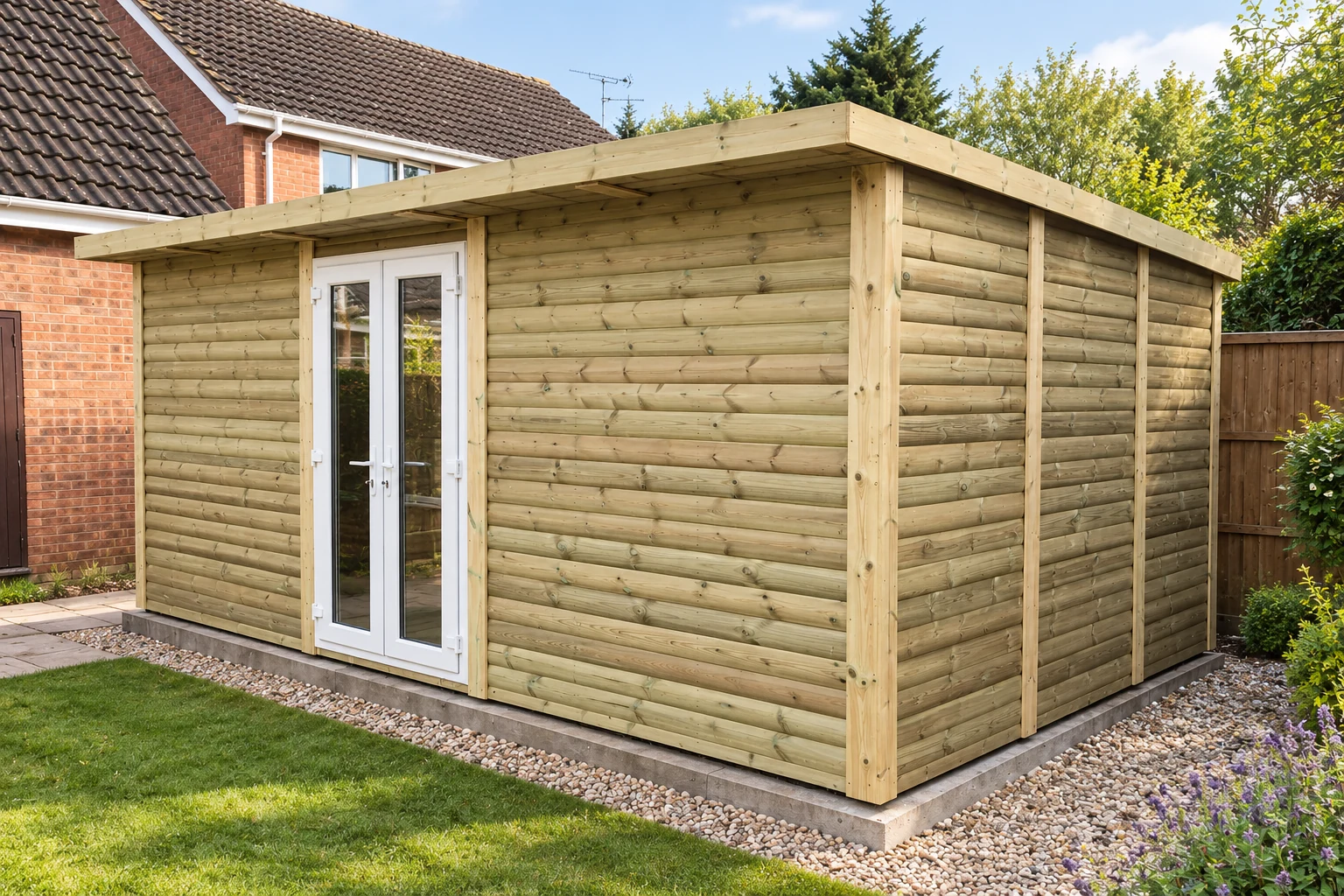
Buyers notice the basics: a sound roof, doors that close cleanly, cladding in good order and no sign of damp. A building that looks tired or temporary raises questions about what else has been neglected. We make ours in our Telford workshop and back them with a 10-year structural guarantee on the main structural framework, subject to use and maintenance guidelines.
Insulation
A room that is comfortable in January is useful all year, which is what a buyer wants from an office or a gym. Our Pods, Garden Rooms, Signature rooms and Annexes are insulated for all-year use, from a multifoil system in Pods to SIPS built to new-build U-values in Signature. Garden Buildings are not insulated and are best used from April to October, so a buyer is more likely to see one as storage or summer space.
Electrics
Proper wiring with its own fuse board, sockets and lighting is what makes a room usable. Our Garden Rooms, Signature rooms and Annexes include an electrics pack with a fuse board, a light switch, two double sockets and four spotlights. The connection to your house supply is quoted separately after a site survey and carried out through qualified electrical contractors. Keep the certificate for that work, because a buyer's solicitor or surveyor may ask for it.
Planning compliance
Most garden rooms in England fall under permitted development, but only within its limits: single storey, within set heights (2.5m overall within 2m of a boundary), not forward of the front of the house, covering no more than half the garden, and never used for sleeping. Building regulations are a separate check, generally not needed under 15m² if no one sleeps in the room. A building outside the rules can hold up a sale, so check before you build; our planning permission guide sets out the limits.
Usefulness
A buyer has to be able to picture using the room. A clear purpose, such as an office, a gym or a studio, with sockets where the desk or equipment goes, is easier to picture than an empty shell or a building full of boxes.
Position and how much garden is left
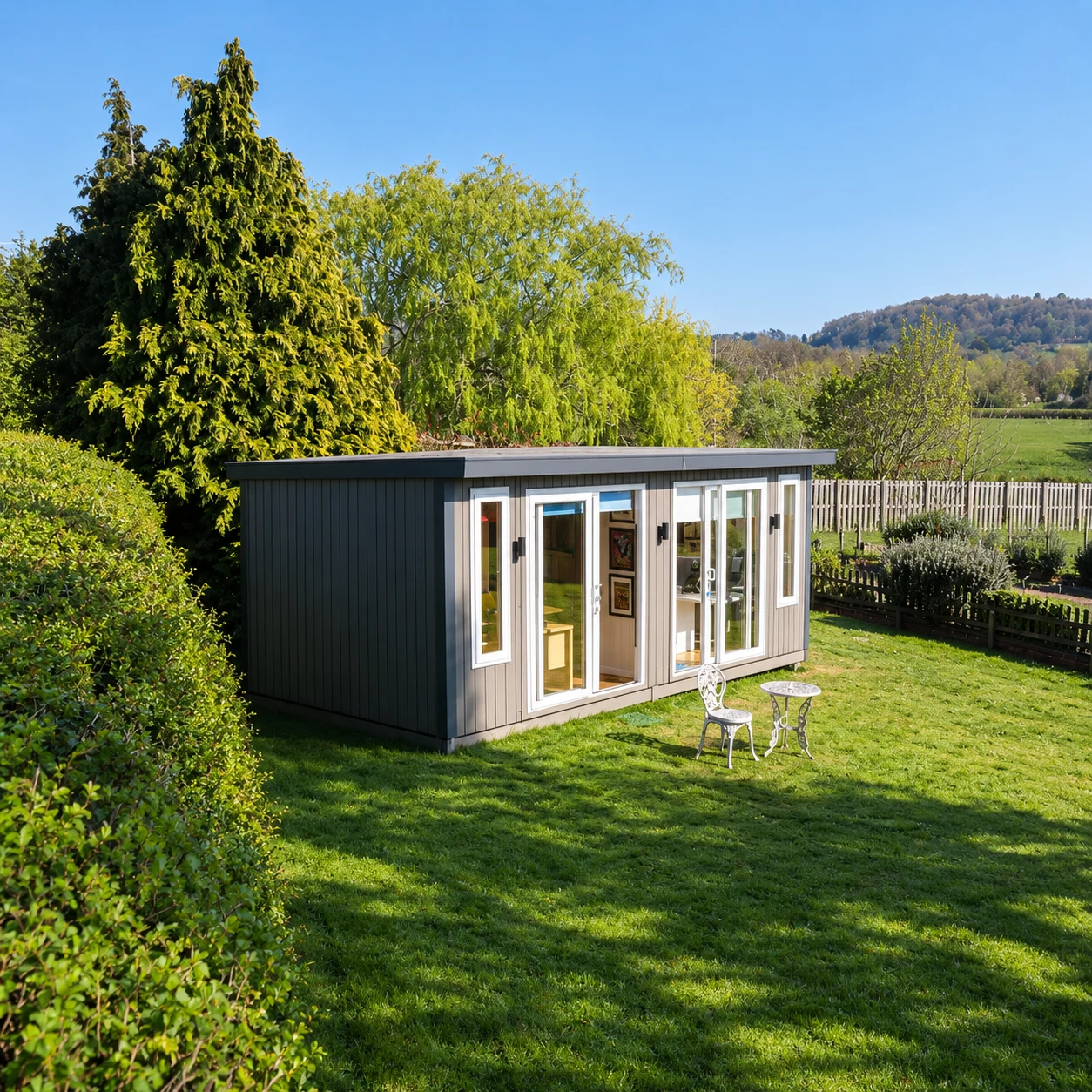
A garden room should add space without taking over the garden. Covering more than half the garden with buildings falls outside permitted development, and a building that swallows the lawn can put off buyers with children or dogs. Siting it to one side, with a path from the house, keeps the garden usable.
What can count against a sale
- Signs of neglect: rot, sticking doors, a leaking roof or tired, flaking finishes.
- Missing paperwork: no evidence of whether the building needed planning permission or building regulations approval.
- Uncertified electrics: a supply run to the building with no certificate for the work.
- Sleeping use without approval: using an outbuilding as a bedroom is not incidental to the house, so it needs planning permission, and you should expect building regulations approval too.
- Too much building for the plot: a large room on a small garden can make the house less appealing to buyers who want outdoor space.
- A building at the end of its life: a low-cost building with thin cladding or no insulation may need replacing before you sell.
Paperwork to keep for when you sell
A buyer's solicitor and surveyor will ask about the garden room. Having the answers in one folder turns it into a quick reply rather than a delay.
- Your order confirmation and written specification: size, range, insulation, glazing and cladding.
- Guarantee documents, including our 10-year structural guarantee and the 10-year manufacturer warranty on the EPDM roof.
- The electrical certificate for the connection to your house supply.
- Evidence of the planning position: how the building meets permitted development, a lawful development certificate, or the planning permission.
- Building regulations approval, if the size or use needed it.
- A record of maintenance, such as cladding treatments and seal checks.
Sources: Planning Portal: outbuildings, planning permission; Planning Portal: is building regulations approval needed for an outbuilding?; Planning Portal: lawful development certificates.