The short version
- Dipped treated timber is faster and cheaper, but it only preserves the outside layer, so it breaks down quicker over time.
- Pressure treated timber has preservative forced deep into it, giving more protection, but it costs more than dipped.
- Don’t judge by colour alone: ask the supplier whether timber is dip-treated or pressure-treated, and to which use class.
- Our terms recommend a waterproofing paint on pressure-treated timber cladding soon after installation, then yearly.
Dipped and pressure treated timber are the two most common methods for protecting timber such as your fence panels. Below, we outline the pros and cons to both treatment methods and why some people opt for a particular treatment over the other.
Dipped treated timber is a faster and cheaper process of protecting timber in comparison to pressure treated. The dipped treatment preserves the outside layer of the timber, which gives off an orange/brown finish when complete. However, as the dipping process only preserves the outside layer of the timber, this eventually breaks down a lot quicker over time compared to pressure treated, especially if it’s not maintained properly.
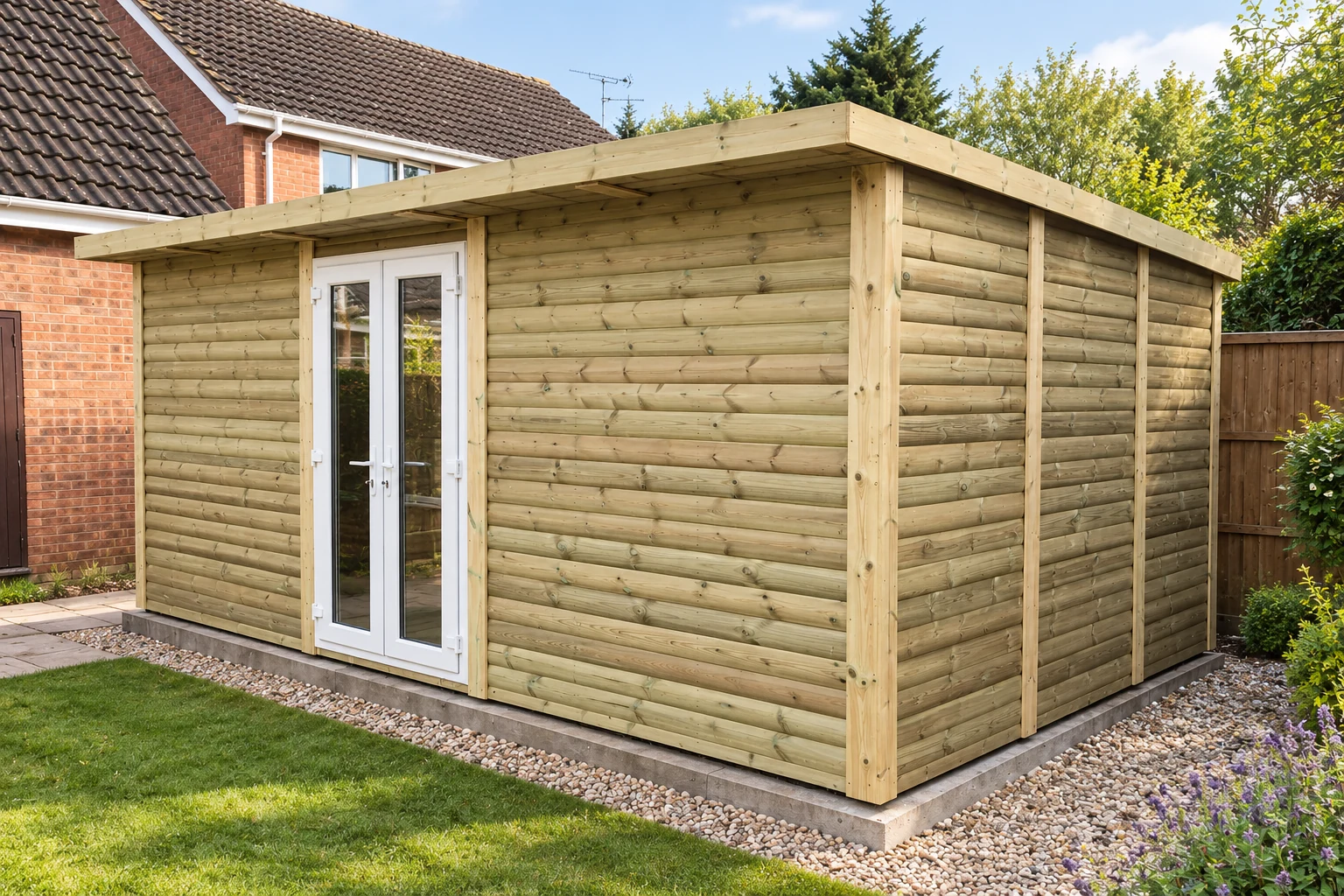
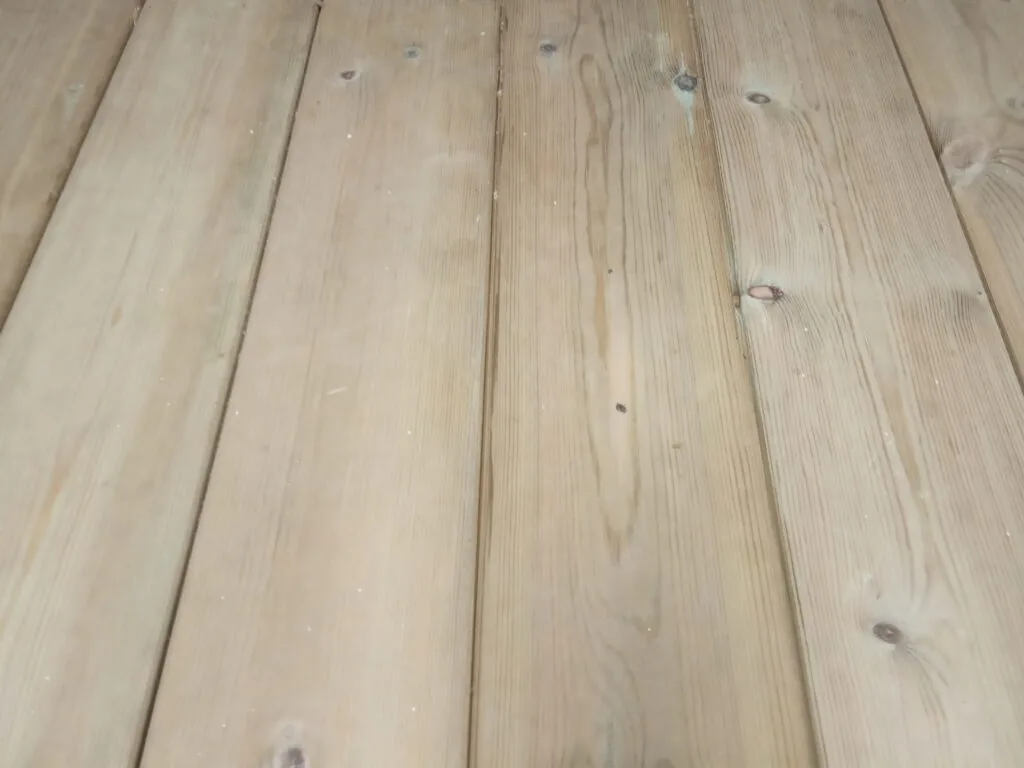
Pressure treated timber basically involves forcing preservative deep into the timber, giving more protection and allowing it to last much longer. The finish gives a tasteful light-green colour that most fence owners choose not to paint. However, the complex process and longer lasting timber means that this option makes it more expensive than dipped treated timber.
Overall, both treatments are widely used and it mostly comes down to your personal preference & budget. If you’re a landlord looking to refurb your property in a shorter timeframe on a smaller budget then the dipped treated method would be the most preferred. If you’re looking for low maintenance, a unique appearance and longer lasting protection, pressure treated timber is a must.
Please Note: It’s recommended that you use an oil-based paint if you choose to paint your fence panels for added protection from water.
How to tell what you are buying
- Ask the supplier whether the timber is dip-treated or pressure-treated, and to which use class. A good supplier can confirm it on the delivery note, the invoice or a treatment certificate.
- Look at a cut end. On pressure-treated timber the preservative colour usually reaches well into the wood; on dipped timber it stays close to the surface.
- Don't judge by colour alone. A green or brown surface tells you little about how deep the protection goes.
- Read the care terms. A requirement for regular re-treatment usually points to a surface treatment.
What it means for a garden building
Softwood cladding is out in the weather all year, so it should be treated by an industrial process that drives preservative into the wood, such as pressure treatment, and anything in contact with the ground needs Use Class 4 levels. Dip-treated cladding is common on low-cost sheds, and it needs regular re-treatment to stay protected.
The timber cladding on our buildings is pressure-treated softwood. The configurator starts Garden Buildings and Garden Pods in it, and you can choose it on every other range. Pressure treatment protects it against rot, not water, so our terms recommend applying a suitable exterior waterproofing paint soon after installation, then keeping it up yearly or as the paint maker recommends.
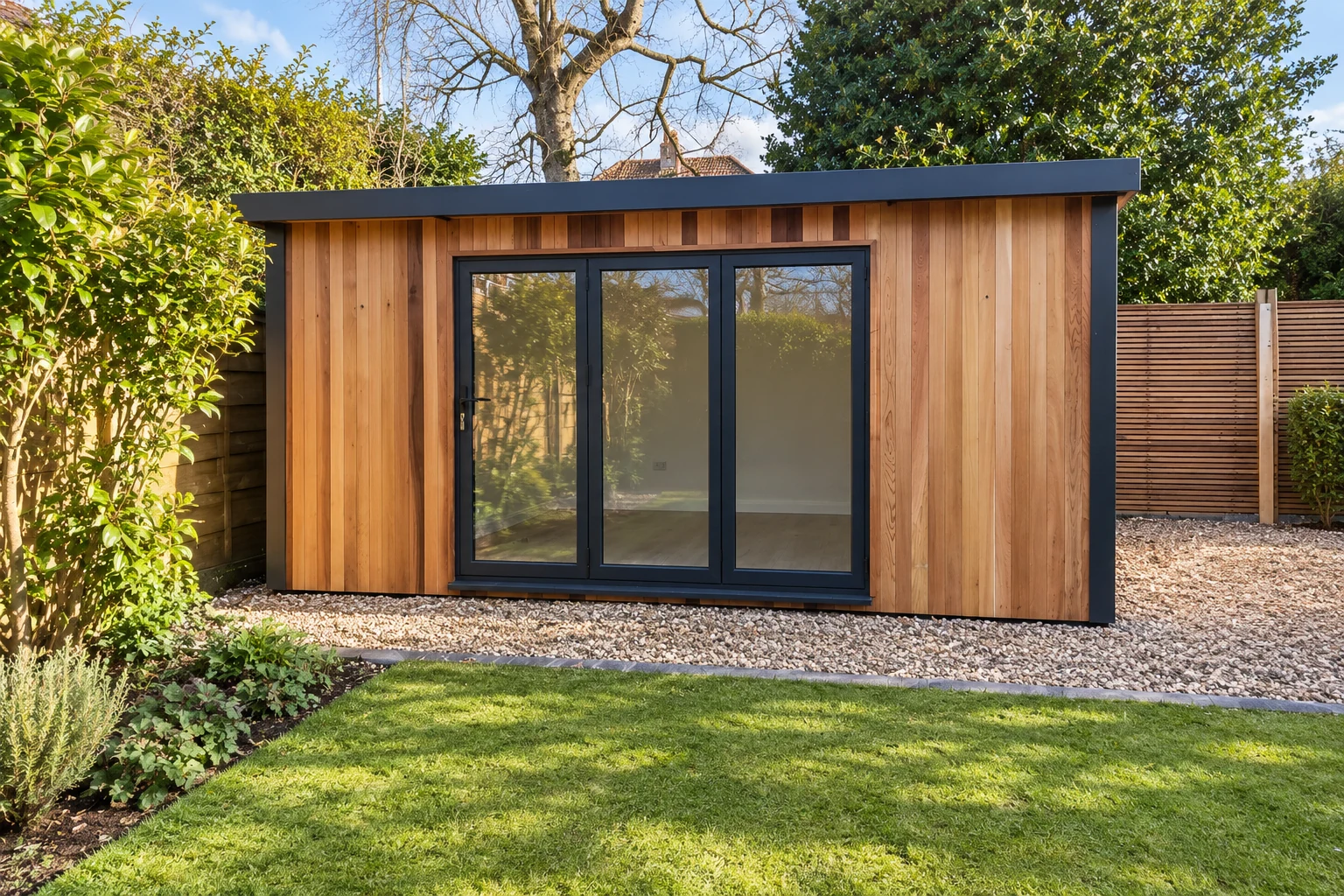
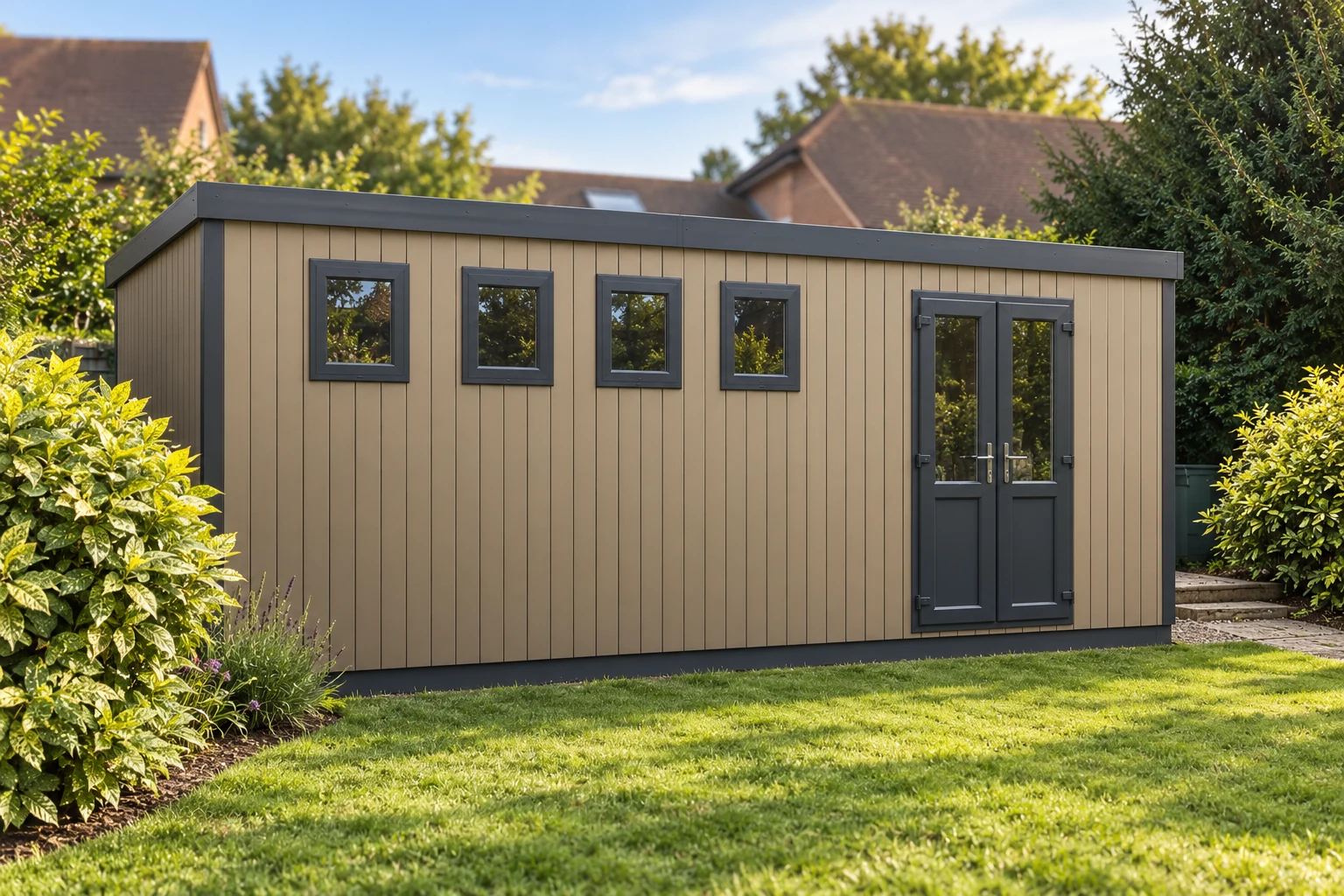
If you would rather not paint, Thermowood is softwood that has been heat-treated rather than impregnated with preservative, and it needs no paint unless you want to change its colour. Western Red Cedar is naturally durable and can be left to silver or oiled, and composite needs little more than a wash-down. Our garden room cladding guide compares the claddings we offer.
If you cut or drill timber cladding, for a cable or a bracket, brush end-grain preservative onto the fresh wood, and talk to us first about any change to the structure. Never burn treated offcuts on a bonfire or in a stove. The government's rules on burning waste wood outdoors cover only clean wood that has not been painted or treated.
Sources: Wood Protection Association: preservative treatments; Wood Protection Association: buyer's guide to preservative treated wood; GOV.UK: burning waste on campfires and bonfires (RPS 50).