

In this article
The short version
- Scarify, aerate and feed the lawn in September or October, while the soil is still warm and moist.
- Rake leaves off the lawn and turn them into leaf mould: most leaves take about two years to rot down fully.
- Plant daffodils by the end of September and tulips in November.
- Before the hard frosts, turn off and drain outside taps, bring hoses in and move tender plants under cover.
- Leave some seed heads and leaf piles for wildlife, and check bonfire heaps for hedgehogs before lighting them.
Winterising a garden means getting the lawn, beds, pots, water supply and tools ready for cold and wet weather, while leaving enough cover for wildlife. In most of the UK the work runs from September to November. Timings shift with where you live: a sheltered city garden can be weeks behind a cold, exposed one, so treat the months below as a guide.
- Lawn careSeptember to OctoberScarify, aerate, overseed and feed
- Spring bulbsFrom SeptemberDaffodils by end of September, tulips in November
- Leaves and bordersOctober to NovemberRake, make leaf mould, mulch
- Frost jobsBefore hard frostsTaps, hoses, pots and tender plants
- Tools and mowerNovemberClean, oil and store
The lawn
The RHS recommends September and October for lawn repairs, while the soil is warm and moist and the grass is still growing. Work in this order:
- Scarify: rake out the thatch of dead grass and moss with a spring-tine rake or a scarifier. If you cannot see soil between the blades of grass, the lawn will benefit.
- Aerate: on compacted patches, push a garden fork in every 10–15cm and rock it back. On clay, a hollow-tine aerator works better. Most lawns need this every two to three years.
- Overseed: sow seed on thin or bare patches. By October it is getting late for seed in cooler parts of the country.
- Feed: use an autumn lawn feed, which is rich in potassium and phosphorus to build roots rather than leafy growth.
- Mow: cut less often, with the blades set a little higher than in summer.
- Keep off: avoid walking on the lawn when it is frozen or waterlogged.
Leaves
Leaves left lying on a lawn block light and moisture and can smother the grass, so clear them every week or two rather than in one big session at the end.
- Run a rotary mower with a collection box over leaves on the lawn: it picks them up and shreds them, so they rot down faster.
- Rake leaves off paths and decking too, because wet leaves are slippery.
- Make leaf mould: pack damp leaves into a wire cage, or into bin bags with holes pierced in them, and leave them out of sight. Most leaves take about two years to rot down fully, and after a year you have a rough mulch.
- Shred thick leaves such as sycamore and horse chestnut first, as they are slow to break down.
- Leave some leaves under hedges and in quiet corners for hedgehogs and insects.
- Net ponds before the main leaf fall, or fish leaves out before they sink.
- Clear leaves from drains, gutters and water butt filters so winter rain can get away.
Borders, beds and bulbs
- Cut back perennials that have collapsed or look diseased, but leave sturdy seed heads and hollow stems standing: birds eat the seeds and insects shelter in the stems.
- Mulch bare soil with garden compost, leaf mould or well-rotted manure while the ground is moist and not frozen.
- Plant daffodils by the end of September and tulips in November.
- Lift dahlias once frost has blackened the leaves and store the tubers somewhere cool and frost-free. In mild areas you can leave them in the ground under a thick, dry mulch instead.
- Plant bare-root hedging, trees and roses from November, while they are dormant.
- Clear finished vegetable crops to the compost heap, and cover empty beds with a mulch.
If you have a cat, plant bulbs where they will not be dug up: daffodils and tulip bulbs are on Cats Protection's caution list. Our cat-friendly garden guide lists the plants to avoid.
Pots and tender plants
- Move tender plants into a greenhouse, a porch or the house before the first frost.
- Stand pots on pot feet so they drain freely instead of sitting in water.
- Group the pots that stay out against a sheltered wall, and wrap them in hessian or bubble wrap in a cold snap.
- Bring in or empty terracotta pots that are not frost-resistant, because they can crack in a hard frost.
- Cover tender plants left outside with horticultural fleece on frosty nights.
An unheated garden building is not frost-free, so don't rely on one to protect tender plants through a hard winter.
Outside taps, hoses and water butts
- Turn the outside tap off at its isolating valve inside the house, then open the outside tap to drain the pipe.
- Fit an insulated cover over the tap and lag any exposed pipework.
- If the tap has no isolating valve, ask a plumber to fit one.
- Drain hoses, coil them and store them under cover.
- Clear leaves from water butt lids and downpipe diverters so the butts refill over winter.
Furniture, tools and the mower
- Clean garden furniture, let it dry, then store it under cover or use breathable covers.
- Bring cushions and parasols indoors.
- Clean the soil off spades, forks and secateurs, dry them and wipe the metal with an oily rag to keep rust off.
- Give the mower a final clean and follow its manual for winter storage, including what to do with any petrol left in it.
- Store batteries for cordless tools indoors, as the maker advises.
A Garden Building gives all of this a dry, lockable home, with multi-point locks as standard and timber-clad double doors to start with in the configurator. A partition can split one building into a tool store and a potting area. See garden storage.
Wildlife
- Leave some seed heads, a few piles of leaves and a log pile in a quiet corner.
- Check bonfire heaps for hedgehogs before you light them, or build the heap on the day you burn it.
- Check long grass and the bottoms of hedges before you mow or strim.
- Clean bird feeders and baths, and keep them topped up through the winter.
- Leave a small gap at the bottom of a fence so hedgehogs can travel between gardens.
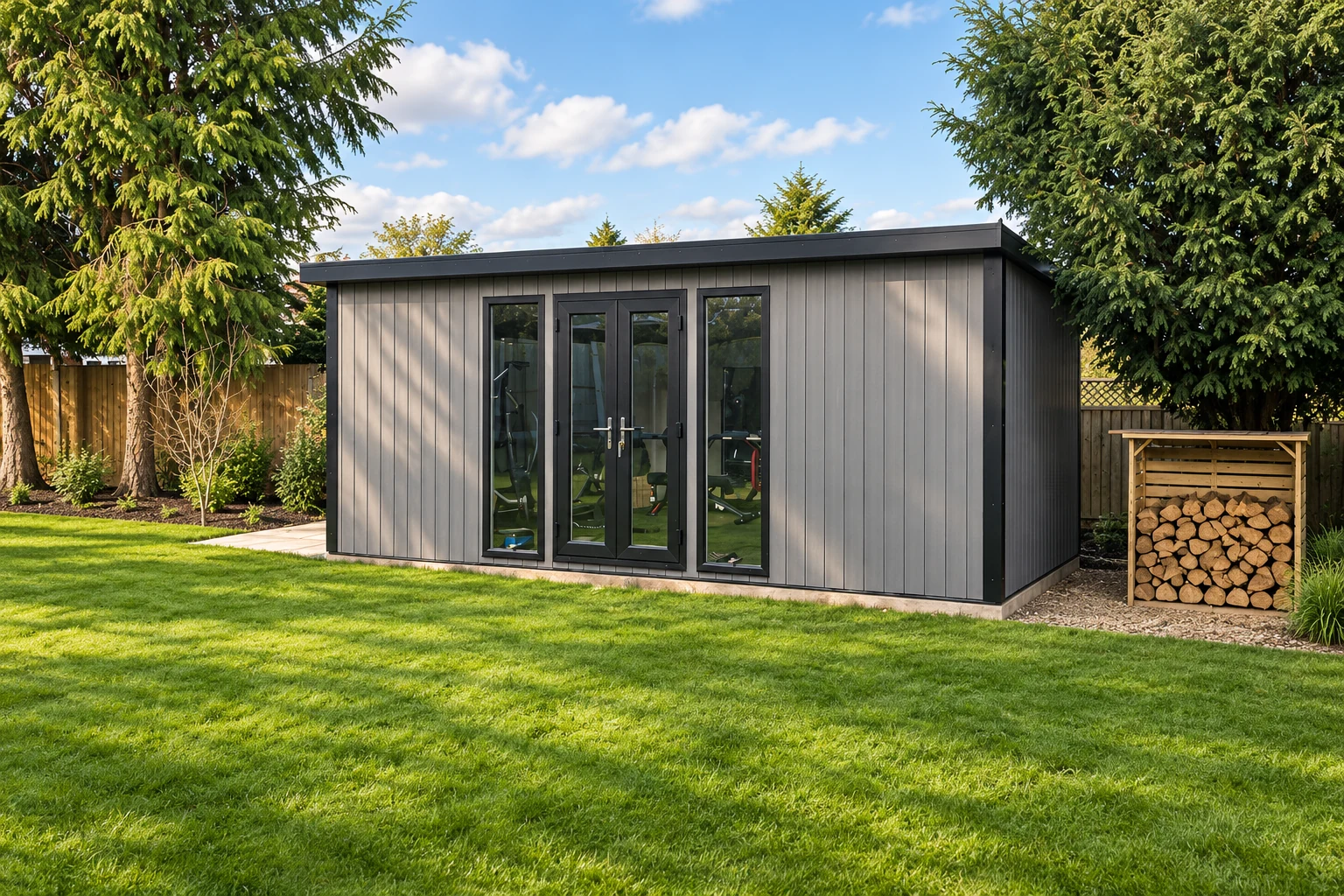
Protecting your garden building
Your garden building needs the same attention as the garden around it. Our pre-winter maintenance checklist covers it in full; these are the jobs that overlap with the garden.
- Clear leaves from the roof edges, gutters and base, working from the ground. Never climb onto the roof.
- Cut branches and climbers back from the roof and walls.
- Keep soil, mulch and bark below the bottom of the cladding.
- Keep pots and log piles a little way off the walls, so the cladding can dry and water can drain away.
- Store water-based paint, and anything else frost can spoil, in the house rather than an unheated building.
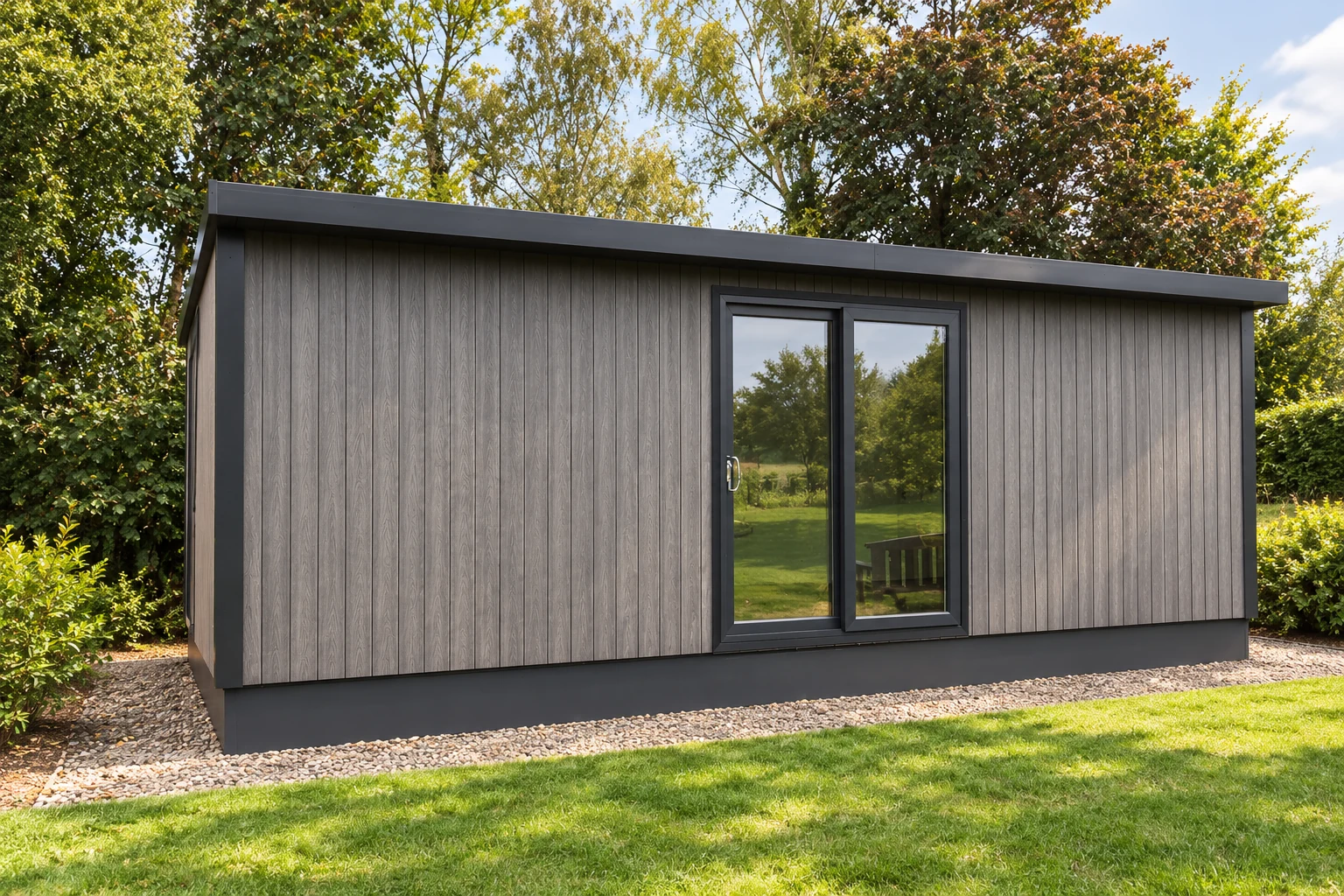
If you also use the building through the winter, our guide to using a winter garden room covers heating, condensation and light.
Sources: RHS: lawn care in autumn; RHS: October lawn jobs; RHS: leafmould; RHS: planting bulbs; RHS: overwintering tender plants.